
A grass that is demanding of soil fertility. Good regrowth capacity after cutting, as long as apical meristem is respected. Excellent response to fertilizers. Larger leaf percentage than Colonião and Tanzânia grasses. Excellent use for grazing, hay and silage. Mind apical meristem and height cut of mombassa grass, to avoid excessive stem growth.
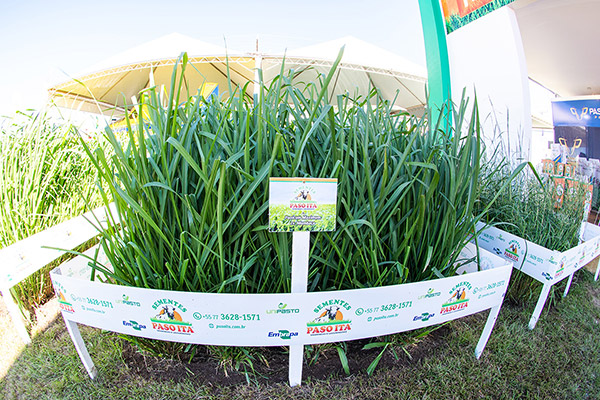
Medium drought and cold tolerance. Medium tolerance to poorly drained soils.
According to soil analysis.
Broadcast seeding or in 20 to 40 cm lines, with seed compaction. Seeding depth 0.5 to 1 cm. Germination from 7 to 28 days, depending on weather conditions. Time necessary before use ranges from 90 to 120 days after emergence.
Mombassa grass production potential depends on soil fertility and grass handling based on apical meristem preservation and the nitrogen fertilizer used.
| Usage Pasture and silage |
Altitude Up to 2000m |
| Drought tolerance Medium |
Annual precipitation Above 800mm |
| Leafhopper tolerance High |
Dry matter yield 15-14t/ha/year |
| Waterlogging tolerance Medium |
Crude protein (%DM) 9%-11% |
| Cold tolerance Medium |
Formation time 70 days |
| Soil fertility High |
Planting depth 2 to 5 cm |
| Soil acidity tolerance Medium |
Growth habit Clumping |